
[Just Doing Its Job] SEC Chair Defends Actions Against Binance
Unregistered firms, including crypto exchanges, operating in the country are hard to pursue when fraud happens, said SEC Chairperson Aquino.
![[Just Doing Its Job] SEC Chair Defends Actions Against Binance](https://bitpinas.com/wp-content/uploads/2024/05/Commissioner-Aquino-on-Binance-Ban-SEC-Is-Just-Doing-Its-Job-768x402.png "[Just Doing Its Job] SEC Chair Defends Actions Against Binance 1")
Unregistered firms, including crypto exchanges, operating in the country are hard to pursue when fraud happens, said SEC Chairperson Aquino.

Zhao’s legal troubles originated from his failure to enforce strict anti-money laundering measures during his tenure as CEO of Binance.
![[After Long Silence] Binance Assures PH Users Following SEC Demand; Google, Apple Urged to Hear All Sides](https://bitpinas.com/wp-content/uploads/2023/08/BitPinas-Banner-768x403.png "[After Long Silence] Binance Assures PH Users Following SEC Demand; Google, Apple Urged to Hear All Sides 3")
Binance also stressed that the situation is just temporary.
The SEC moves with its intention to ban the Binance app in the Philippines by sending requests to Google and Apple to remove the app in their respective app stores.
SEC also said they intend to shut down the Binance app that is still accessible despite the ban.
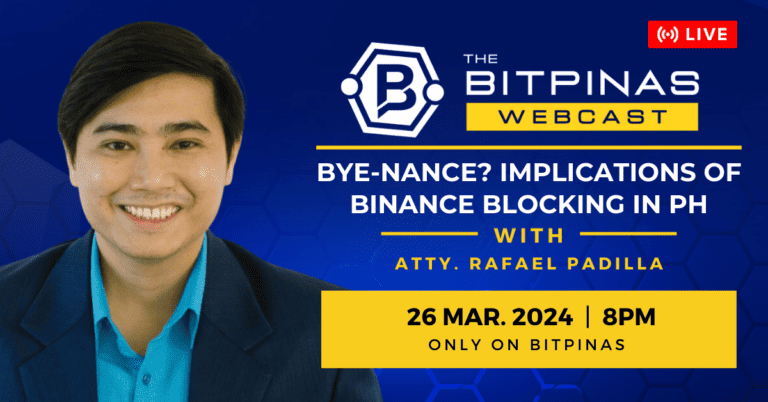
Atty. Rafael Padilla, joined by regular BitPinas collaborators Aldrin Rabino, Eli Rabadon, and Henry Banayat will discuss the impending ban on Binance,
SEC said it gave ample time for Binance users in the Philippines to take out their money in the international exchange.
BitPinas is excited to host three resilient projects that began their journey in 2018 or earlier.
As $RON reaches an all-time high, we talk to entrepreneur and content creator Kookoo Crypto TV on the factors contributing to the increased interest in the Ronin blockchain and the games built on top of it.
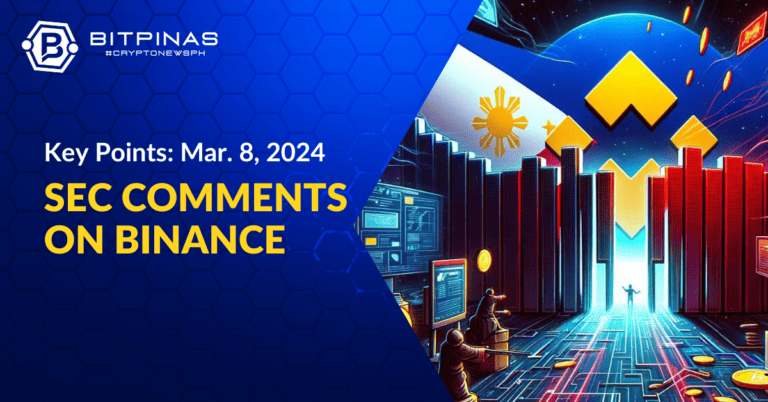
The Chairman of the SEC reveals the reason why Binance was not banned within three months, as was first mentioned November of last year.